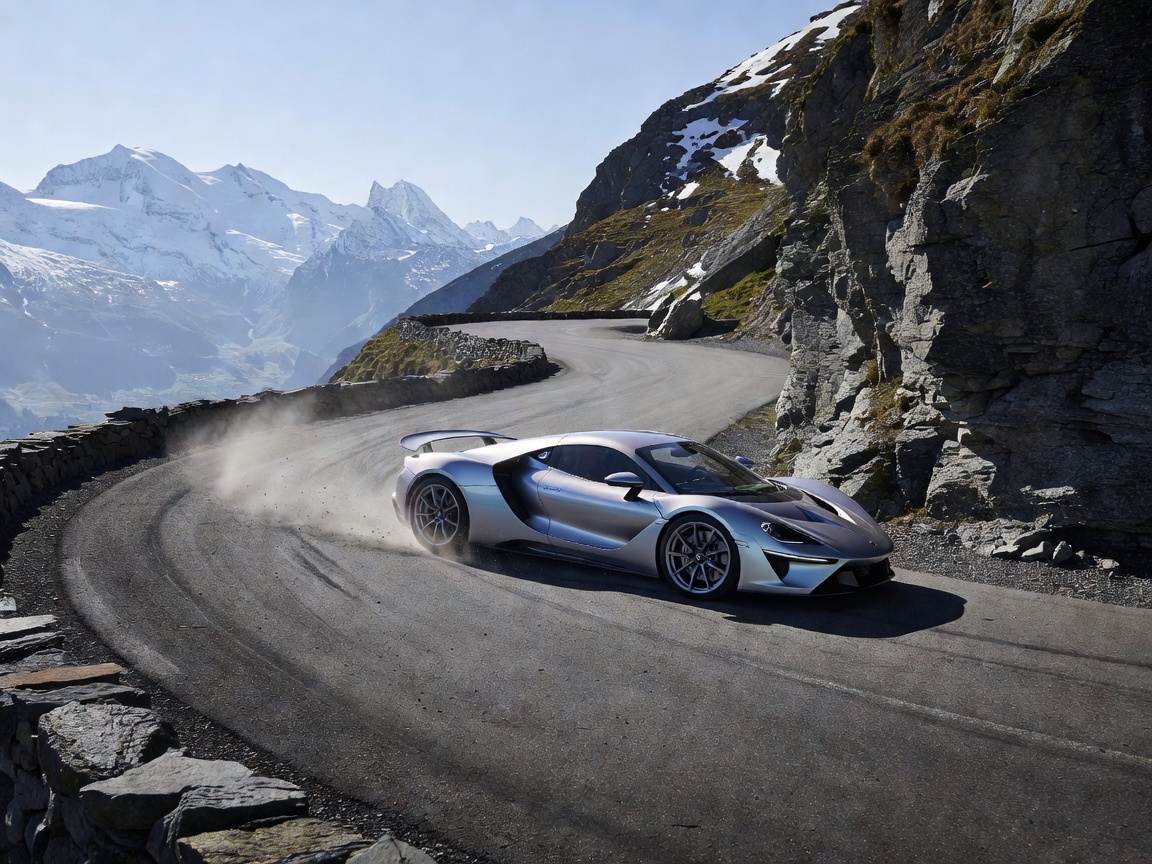
The Holy Trinity of Passes
When engineering a grand tour across Europe, the Swiss Alps present an unavoidable—and magnificent—obstacle. Rather than bypassing the peaks, automotive enthusiasts seek out the legendary central Swiss loop comprising the Susten, Grimsel, and Furka passes. This triad represents the pinnacle of Alpine road construction. The surfaces are meticulously maintained, the gradients are challenging but consistent, and the views are nothing short of monumental.
Unlike some of the narrower Italian passes, which can induce claustrophobia in modern, wide supercars, the Swiss approach favors sweeping curves, well-sighted entry points, and generous lane widths. You are rarely forced to fold your mirrors in to squeeze past oncoming traffic. The Susten Pass, in particular, is an absolute masterclass in civil engineering, delivering a rhythm of mid-speed sweepers and beautifully cambered hairpins.
Tarmac & Driving Dynamics
The primary advantage of the Alpine Run is the predictability of the surface. Switzerland invests heavily in these high-altitude arteries. Potholes are virtually non-existent, and the tarmac is typically a high-friction compound that offers exceptional grip, even when ambient temperatures hover in the single digits. This consistency allows drivers to lean into the mechanical grip of their vehicles with immense confidence.
However, the dramatic changes in elevation present their own unique mechanical challenges. Naturally aspirated engines will experience a noticeable reduction in volumetric efficiency as the air thins out near the 2,400-meter peaks. Forced induction vehicles—both turbocharged and supercharged—fare much better, maintaining their torque curves despite the lack of oxygen. Regardless of aspiration, the descent will heavily tax your braking system. Carbon-ceramic brakes are highly recommended here; iron rotors can easily succumb to brake fade if you rely too heavily on the middle pedal instead of engine braking.
The Ideal Supercar Match
While hypercars and ultra-stiff track specials can survive the Alps, the definitive weapon of choice for this route is a modern Grand Tourer with adaptive damping. Vehicles with a slightly softer suspension geometry will breathe with the road over expansion joints and frost heaves. Wide, mid-engined supercars with excellent front-end visibility excel on the Furka Pass, where placing the front tires accurately against the apex edge is crucial for maintaining momentum.
Practicalities & Considerations
The operational window for these passes is strictly dictated by the climate. They are entirely buried in snow for the majority of the year, generally opening in early June and closing by late October. Even during the peak summer months of July and August, weather can pivot from blazing sunshine to dense, freezing fog within twenty minutes. Always check the live Swiss pass status portals before turning the ignition.
Timing your run is equally critical. To avoid the relentless procession of campervans and cycling pelotons, you must be at the base of your first pass by 6:00 AM. A dawn assault not only guarantees clear tarmac but also provides an acoustic environment that is unmatched. The sound of a performance exhaust echoing off the sheer granite faces of the Grimsel Pass is a visceral experience that validates every penny spent on the vehicle.
Finally, respect the local legislation. Swiss authorities employ zero tolerance regarding excessive speed through villages and noise ordinance violations. Save the dynamic driving for the open, de-restricted mountain sections where visibility is clear, and always drive well within the limits of your sightline.