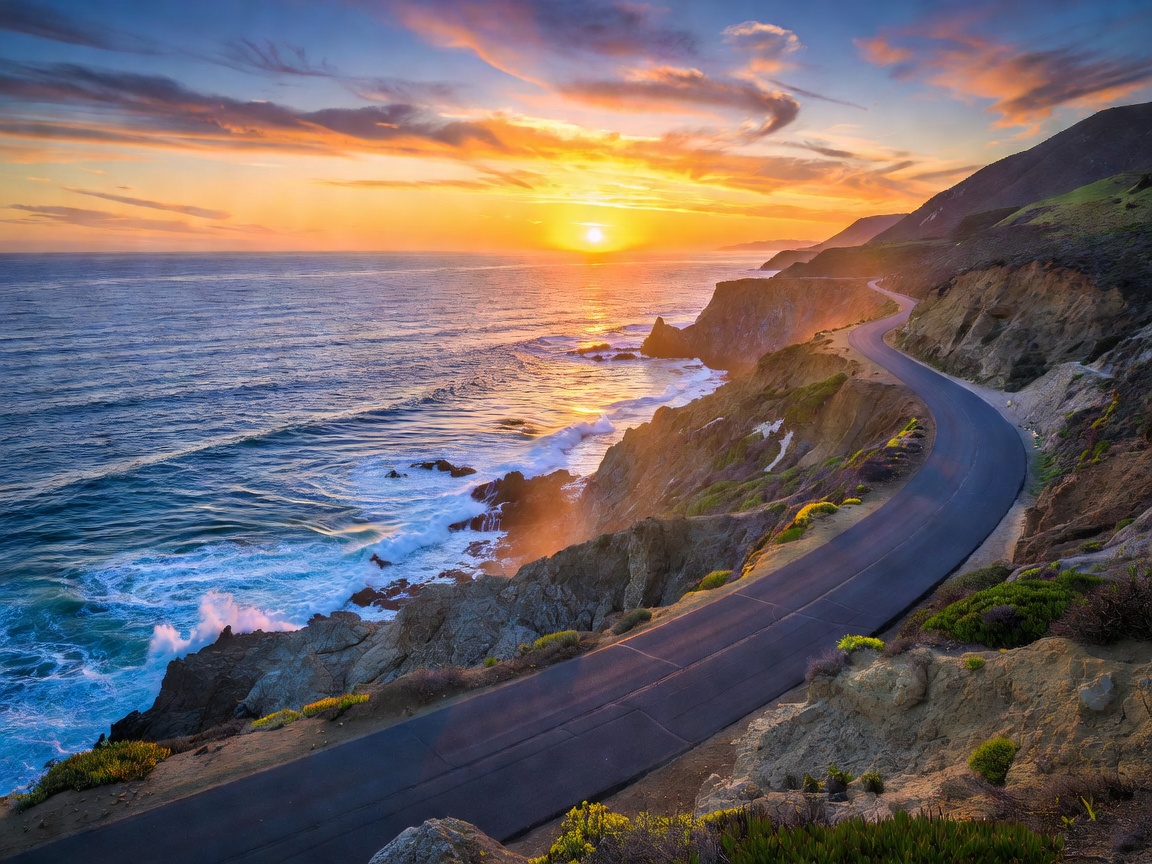
The Big Sur Coastal Shelf
Route 1, specifically the stretch encompassing Big Sur from Carmel-by-the-Sea down to San Simeon, is arguably the most photographed road in North America. Hewn directly into the sheer cliffs overlooking the crashing Pacific Ocean, the engineering marvel of the Pacific Coast Highway (PCH) provides a motoring experience heavily weighted towards visual spectacle rather than outright dynamic limit-handling.
The highway constantly writhes and contours to the natural indentations of the coastline. You are treated to deep, shadowed ascents through ancient redwood groves that suddenly explode out onto sun-drenched, cliff-edge viaducts like the iconic Bixby Creek Bridge. It is a sensory overload that demands a compliant suspension and a relaxed grip on the steering wheel.
Tarmac & Driving Dynamics
The road surface on the PCH is highly variable. Due to the constant geological shifting of the California coastline, landslips and subsequent repairs are frequent. You will encounter stretches of pristine, freshly laid asphalt followed immediately by older, deeply scarred tarmac with aggressive camber changes intended to manage heavy rainfall.
Driving the PCH in a high-performance vehicle requires extreme discipline. This is not a track. There are virtually no runoff areas; your margins of error consist of a solid rock face on one side and a precipitous drop into the ocean on the other. Furthermore, the route is heavily policed by the California Highway Patrol. Speed limits rarely exceed 55 mph, and dropping below 35 mph is common in the tighter technical sections. The joy of the PCH is found in maintaining a fluid, unbroken momentum—feeling the chassis load up progressively through the sweeping coastal bends rather than attacking them aggressively.
The Ideal Supercar Match
Convertible Grand Tourers and luxury-focused performance cars are the undisputed kings of the PCH. Drop-top variants like a Bentley Continental GTC, Aston Martin DB11 Volante, or a Porsche 911 Cabriolet allow you to fully immerse yourself in the environment—smelling the salt air and listening to the exhaust note reverberate off the cliff walls. Hyper-aggressive track cars with fixed bucket seats and minimal sound deadening will feel completely out of their element here, transmitting every bump into your spine while failing to utilize their aerodynamic advantages.
Practicalities & Considerations
Environmental vulnerability is the biggest caveat when planning a PCH tour. Severe winter storms routinely cause mudslides that completely wash away sections of the road, leading to closures that can last for months as heavy engineering teams rebuild the cliff faces. Always verify the road status through Caltrans before plotting your route.
Fuel logistics require planning. Stations in the heart of Big Sur are extremely rare, and the few that exist charge astronomical premiums for fuel that may not meet the high-octane requirements of a heavily tuned engine. Ensure your tank is completely full before departing Carmel or Cambria.
Finally, anticipate dense traffic. Tourists frequently stop abruptly or pull out of unpaved viewpoints without looking. Driving defensively is paramount. To secure a clear run of the road, a pre-dawn departure is mandatory, watching the sun rise over the mountains and illuminate the Pacific mist before the crowds arrive.